The Weight of the Word: What Is Genocide, and How Does It Happen?
The Bosnian Genocide
On April 6, 1992, violence erupted in Bosnia Herzegovina, marking the beginning of three years of ethnic cleansing, civilian murder, and planned, systemic acts of terror and extermination against Bosniaks: a genocide. By December 14, 1995, over 100,000 people were killed and half of Bosnia’s population –4.4 million– was displaced (Mennecke 479). Following the gut-wrenching atrocities committed during the Holocaust, the international community came together with the vow of ensuring that genocide would “never again” be committed. The formation of the United Nations and the drafting of the 1948 Genocide Convention, which legally defined and outlawed genocide for the first time, marked the beginning of a concerted effort towards atrocity prevention. And yet, only 50 years later, the Bosnian Srebrenica genocide marked the most deadly massacre in Europe since World War II.
There are current genocides being carried out in Myanmar, Sudan, the Democratic Republic of Congo, and many more countries as you read these very words. How does this happen? Why is it tolerated? What has to happen for “never again” to become a reality?
The Dissolution of Yugoslavia: A Landslide of Ethnic Violence
Following the death of peacekeeping Yugoslav dictator Josip Tito in 1980, Serbian and Croatian nationalists exploited World War II traumas and spread ethnonationalist propaganda to incite ethnic resentment and mass paranoia. As a result, the Serb and Croat public began to falsely view Bosniaks as caricatured jihad fighters trying to create a terrorist state. This was one of many processes of othering, a system of pitting one group against another in such a way that they believe they are irreconcilably different by dehumanizing the victim group.
In this way, Bosniaks were transformed from peaceful neighbors into dangerous “foreigners” in their native country. Serb and Croat politicians justified ethnic violence against Bosniaks as necessary to eliminate Bosnia’s “internal threat.” These actions led to escalating, divisive anger among Orthodox Christian Serbs, Catholic Croats, Muslim Bosniaks.
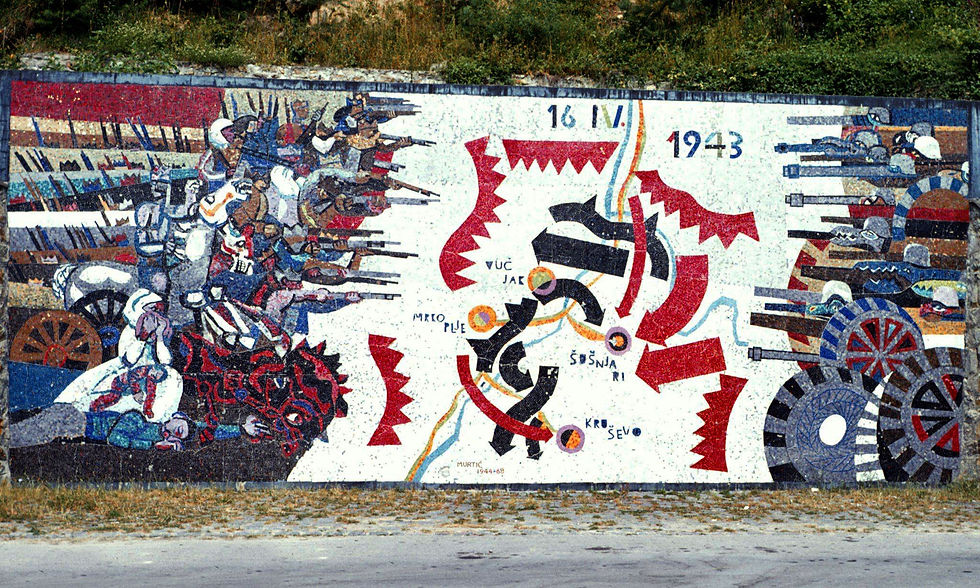
To learn more about memorial mosaics in Bosnia and ex-Yugoslavia, visit Spomenik Database.
How and why did the Bosnian genocide happen?
The complex drivers of the Bosnian War generated escalating fear and anger entrenching the divides between Orthodox Christian Serbs, Catholic Croats, and Muslim Bosniaks. Months after the vicious Serbo-Croatian War of secession ended in December of 1992, the Bosnian War broke out parallel to the genocide. The powerful Serbian and Croatian armies attacked Bosnia to eradicate its Muslims in an attempt to erase the “dangerous” diversity and universalism of its cities and annex “cleansed” regions into Greater Serbia and Greater Croatia (Ali, Lifschultz 367). Murder and ethnic cleansing were justified to ensure “national security’’ and eliminate the Bosniak threat (Weidmann 1180). Nationalist politicians transformed the Bosniak neighbors they had peacefully lived with for generations into “foreigners” who had to be exterminated by any means necessary (Ali, Lifschultz 368).
In April 1992, Serb forces entered the town of Bijeljina on a campaign of terror and murder. Almost the entire Muslim population was either killed or driven out, setting a blueprint for the violence characterizing the Bosnian genocide (Konstandi). Evidently, Serb genocidal acts and intentions were clear from the beginning of the conflict. Bosnia’s Muslim men and boys were targeted for extermination in towns across Bosnia. Men were kept in concentration camps where they were tortured, beaten, and eventually executed with rifles and automatic weapons. Bosniak women and girls were systematically raped publicy –in front of family members or in village centers– to spread terror and trauma. Tens of thousands of rapes were ordered by Serb officials as an orchestrated attack to terrorize and intentionally impregnate Bosnian women (Mennecke 479). Evidently, rape and sexual enslavement were part of the Serb policy of genocide aimed to destroy Bosniak women’s dignity and autonomy (Women of Bosnia).
Both Serbs and Croats participated in widespread, planned ethnic cleansing of Bosniaks through forced deportation, after which they would burn, destroy, and loot entire towns and cities. As a tactic to erase Bosnia’s recorded history, libraries of priceless manuscripts, bridges, and mosques were deliberately destroyed. These attempts to demolish Bosnia’s people, heritage, and history were part of the calculated plan to erase their very identity (Ali, Lifschultz 369).
The International Response
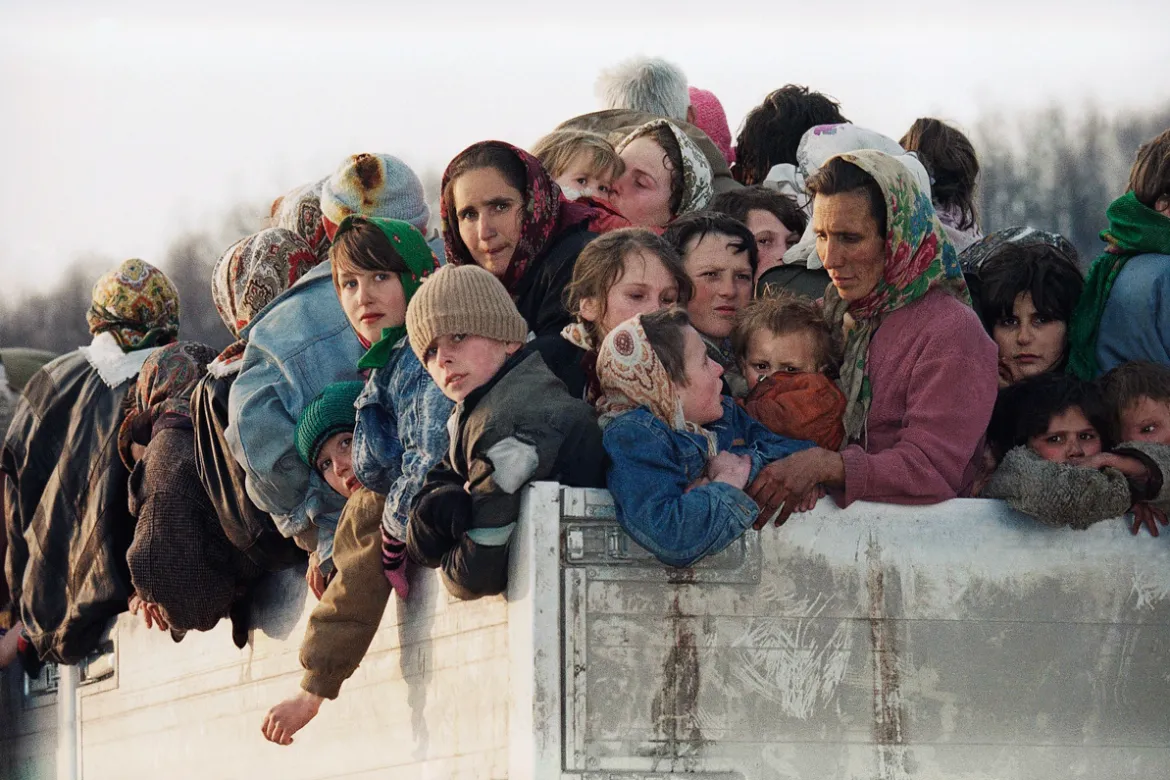
Image by Michael Euler of women and children being evacuated from the UN enclave of Srebrenica on March 29, 1993. Upwards of 2,300 people were similarly evacuated from the safe area to Tuzla airport.
Although the international community attempted to aid the conflict in Bosnia, their efforts were half-hearted and did little to mitigate the violence. In the midst of the genocide, the U.N. Security Council deployed their peacekeeping forces. However, their ability to protect civilians was set back by rules limiting their engagement as well as insufficient resources. However, the lack of political will from international powers to deploy sufficient military peacekeeping forces in Bosnia resulted in an appalling loss of civilian lives (Mennecke 485). In July, 1992, U.S. president Bill Clinton approved the deployment of American planes to bring basic resources to Srebrenica, a U.N. safe enclave. The United States also lifted the U.N. embargo on armed weapons and organized airstrikes at Bosnian Serbs.
"Safe Zones"
Although the international community attempted to aid the conflict in Bosnia, their efforts were half-hearted and did little to mitigate the violence. In the midst of the genocide, the U.N. Security Council deployed their peacekeeping forces. However, their ability to protect civilians was set back by rules limiting their engagement as well as insufficient resources. However, the lack of political will from international powers to deploy sufficient military peacekeeping forces in Bosnia resulted in an appalling loss of civilian lives (Mennecke 485). In July, 1992, U.S. president Bill Clinton approved the deployment of American planes to bring basic resources to Srebrenica, a U.N. safe enclave. The United States also lifted the U.N. embargo on armed weapons and organized airstrikes at Bosnian Serbs.
Jenonne Walker, senior director for Europe on the National Security Council during the Bosnian War, claims that the safe zones were a “‘fake policy’ designed to create the appearance that the U.S. was doing something it wasn’t (Lynch).” That same month, Clinton’s security advisors decided against utilizing American aviation to defend the safe zones from Serb attacks. Although the U.N. and other international powers invested small efforts into bringing saftey to vulnerable Bosniaks, they wrongly oversimplified the genocide as inevitably resulting from “ancient hatreds” (Mennecke 481).
The Srebrenica Massacre
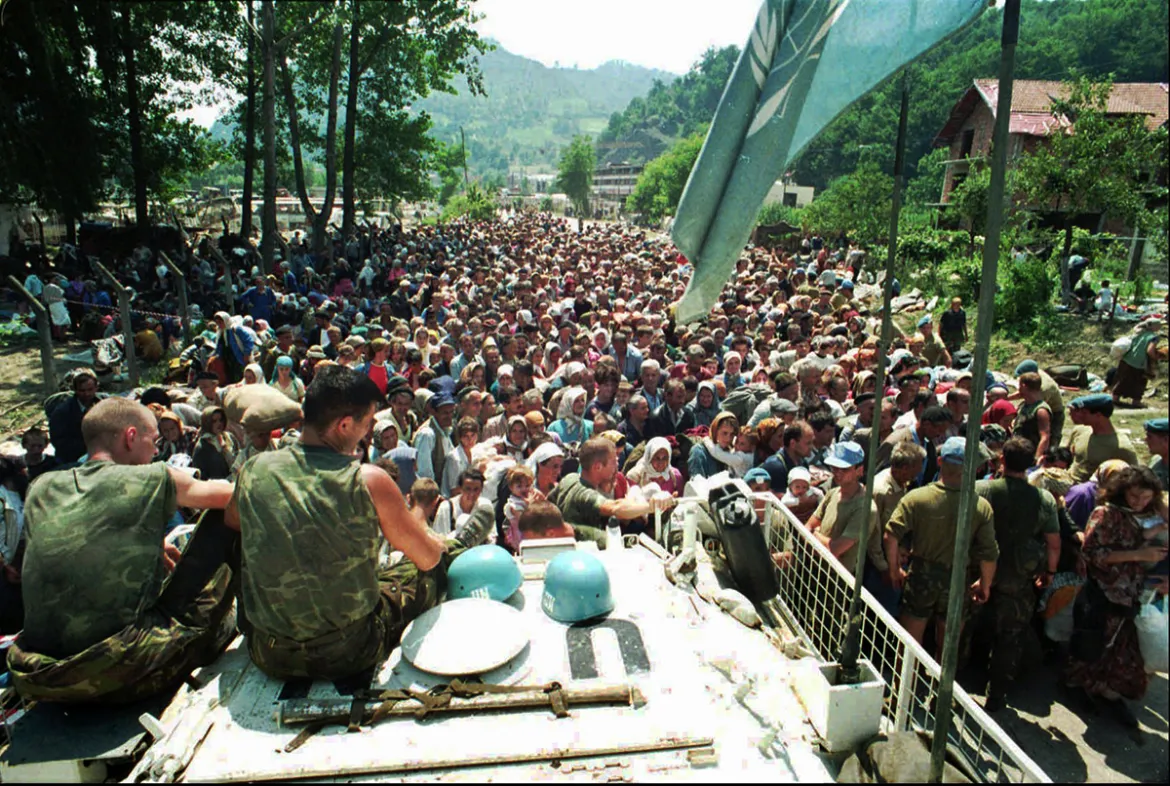
July 13, 1995: Dutch U.N. peacekeepers sitting on an armored vehicle overlook a crowd of Srebrenica refugees in the nearby village Potocari. [AP Photos]
On July 11, 1995, Serb military forces entered Srebrenica, a designated Muslim safe area, as Dutch U.N. soldiers and the international community stood by. Within 30 hours, Serb forces deported more than 20,000 women and children via buses to the frontline of Muslim-controlled territory. Over the course of 6 days, more than 8,000 battle-age Bosniak men were systematically captured and slaughtered with machine guns in a carefully planned operation. The Dutch soldiers observed the deportations, supplied fuel for the buses used by Bosnian Serbs, and even handed civilian refugees seeking safety over to the Bosnian Serb forces (Mennecke 480, Eyewitness Testimony). Despite its many warning signs, the Srebrenica genocide became the most deadly massacre in Europe since World War II.
NATO finally intervened after witnessing the failure of U.N. efforts to protect Bosnia.
The Aftermath of the Genocide
Many strongly believe that the international response to the suffering of the Bosnian Muslims during the conflict was appallingly inadequate. In April, 2002, the Dutch cabinet resigned in response to a report written by the U.N. Secretary General Kofi Annan criticizing member states for their failure to implement Security Council resolutions. It also condemned the Dutch battalion and U.N. convoys for ignoring information prior to the Srebrenica massacre. The Dutch Parliament released a report that confirmed both the Dutch government and the U.N. mishandled the situation and holds partial responsibility for the lack of protection of the Muslim civilians at Srebrenica (Mennecke 487). International and national bodies, such as the United States and UN, have now acknowledged a shared responsibility for mishandling the safe areas in Srebrenica and other areas in Bosnia (Mennecke 486-7).
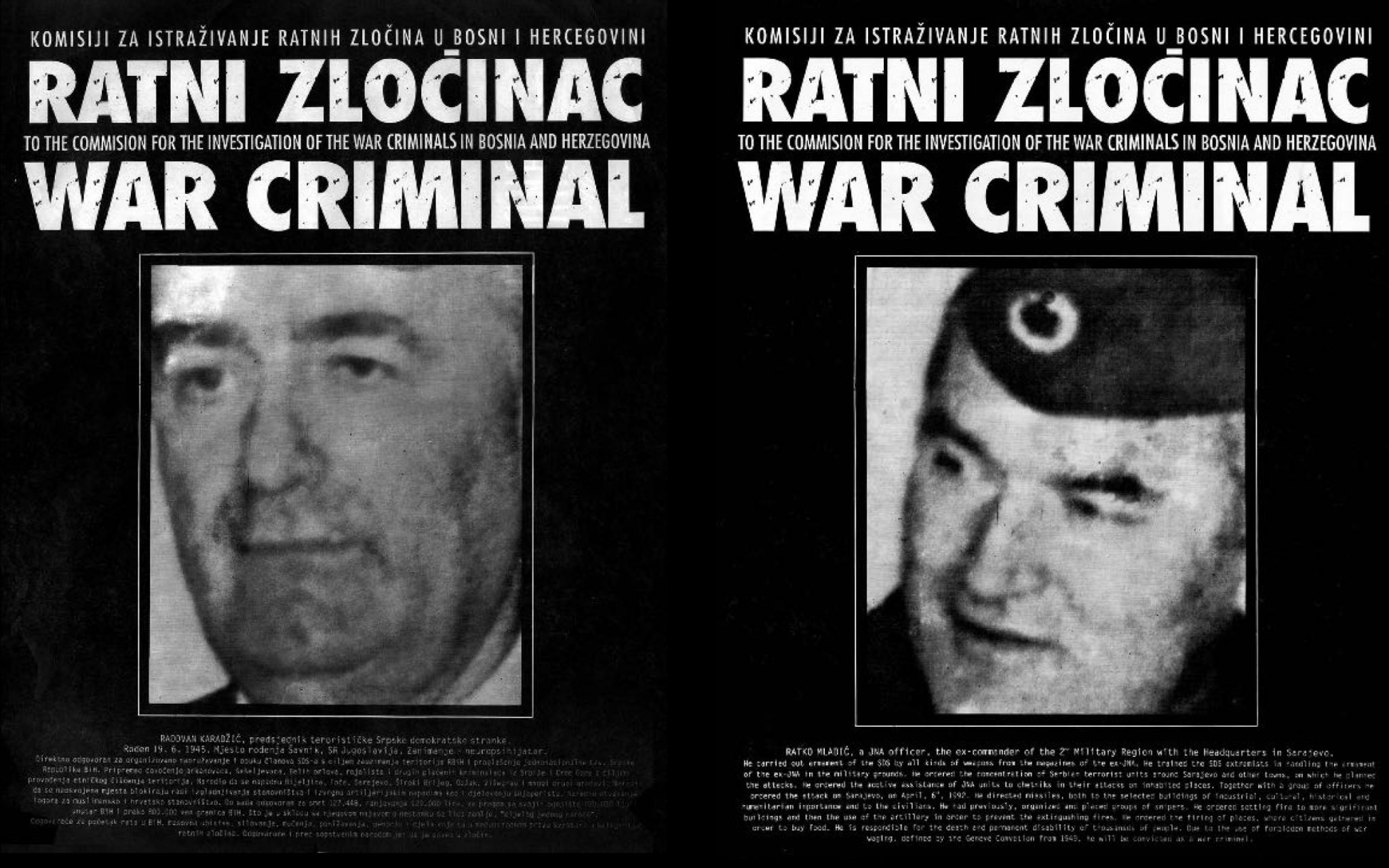
Image sourced from Balkan Transitional Justice. Unofficial wanted posters for Serb leaders Radovan Karadzic and Ratko Mladic, the two military and political leaders who were the primary orchestrators of the Bosnian genocide.
In the aftermath of the genocide, international powers tried to bring justice and hold perpetrators accountable through the ICTY and ICJ. At the beginning of the conflict in 1992, the U.N. Security Council voted to create the International Criminal Tribunal of Yugoslavia (ICTY) to collect evidence of human rights violations and identify perpetrators (Yacoubian 135). Its focus was on prosecuting the only highest-ranking political and military leaders (Shenk et al. 552). The ICTY was the first court to declare rape a crime against humanity, however it did not recognize it as a means of performing genocide (Shenk et al. 556).
In 2007, the U.N. International Court of Justice (ICJ) found that only the 1995 Srebrenica massacre constituted genocide as an intentional extermination of a single targeted group. All other acts of mass atrocity were not legally recognized as genocide. The Court found that Serbia did not have direct control over Bosnian Serb forces in Srebrenica. Although the crimes were aimed at removing all non-Serbs from what was considered Serb territory, the Court ruled that these actions did not demonstrate an intent to destroy a specific group in whole or in part, and therefore did not fall under the legal definition of genocide. However, the Court believed that Serbia did violate its legal duty to stop such atrocities and punish those responsible. As a result, Serbia became the first nation to be internationally recognized as violating the U.N. Genocide Convention since its adoption in 1948.
However, many feel that the ICJ’s focus on only the worst massacre, Srebrenica, was too narrow and therefore disregarded the systemic, widespread, and various forms of attacks to erode Bosniaks’ very foundations of life (Mennecke 493-4). Despite ongoing trials, survivors are still waiting to receive justice and recognition for their suffering.
Modern-Day Repercussions
The Bosnian genocide was a deliberate, violent campaign to erase a specific people. Its visible, lasting scars are a result of the horrors enabled by militant ethnonationalism, intense propaganda, and international inaction and silence. Let this remind us of the catastrophic costs of looking away in the face of genocide.
To learn more about the lasting effects of genocide and ethnic cleansing in Bosnia, please explore the linked resources below.
War Survivors Still Await Justice
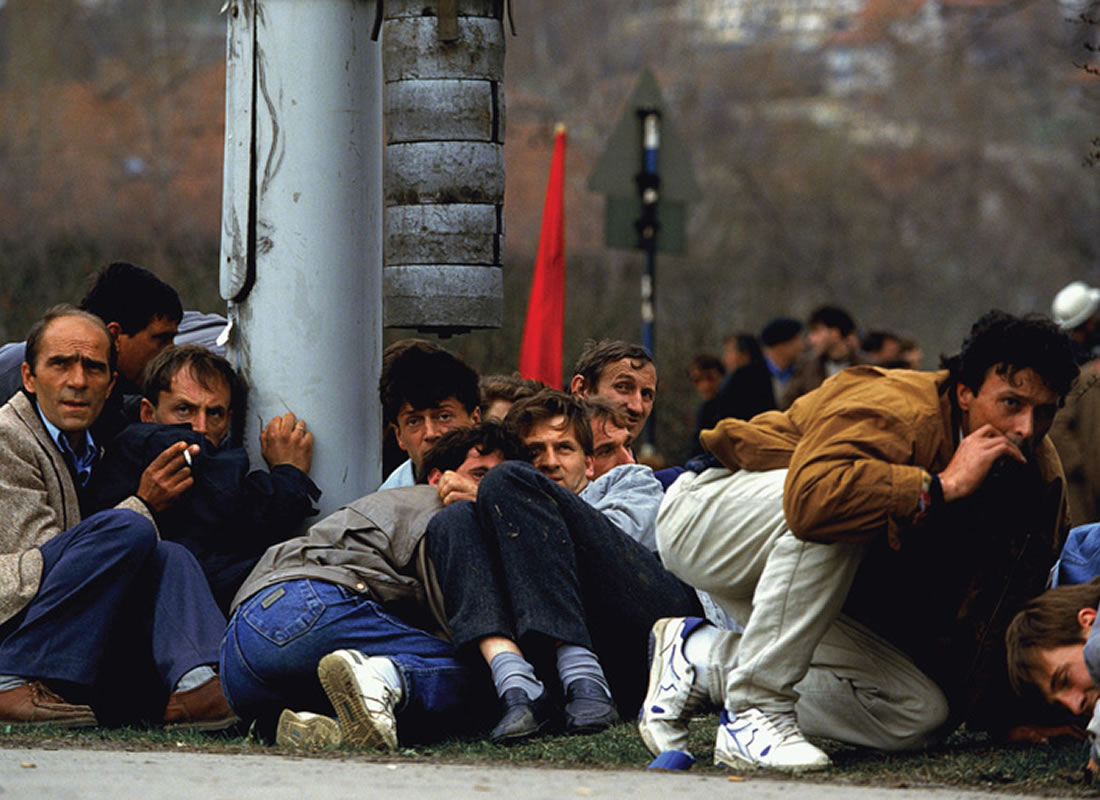
Despite recent arrests of the main orchestrators of the atrocities commited towards Muslim Bosnians (often referred to as Bosniaks), the fact that the full multitudes of deaths and suffering continue to remain unrecognized erode a sense of true justice being served.
What do you believe to be justice in the wake of such unimaginable crimes, committed by one group against another? Is it enough to hold just the leaders accountable? What are the alternatives?
The Women of Bosnia: "Whose Justice?"
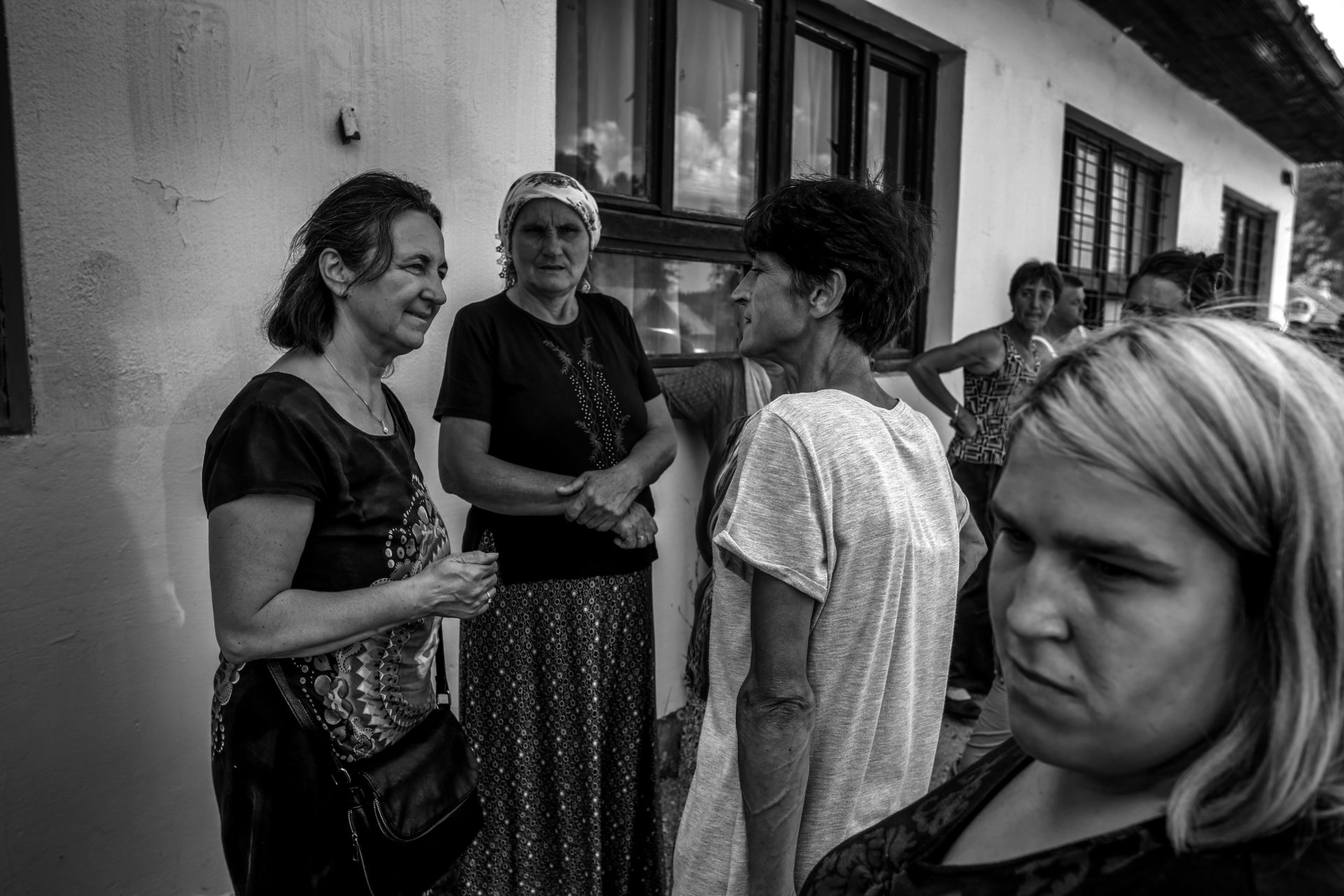
Bosnian women who were victims of the systematic rapes of the Bosnian Genocide continue to be ignored, with many of their base human rights still violated. Learn more about this dark chapter of history in order to understand what steps must be taken for these women to receive recognition for the attacks they endured.